Loading…

We use cookies. We use cookies, including analytics, to improve your experience.
FIELD GUIDE
LOCAL INTELLIGENCE
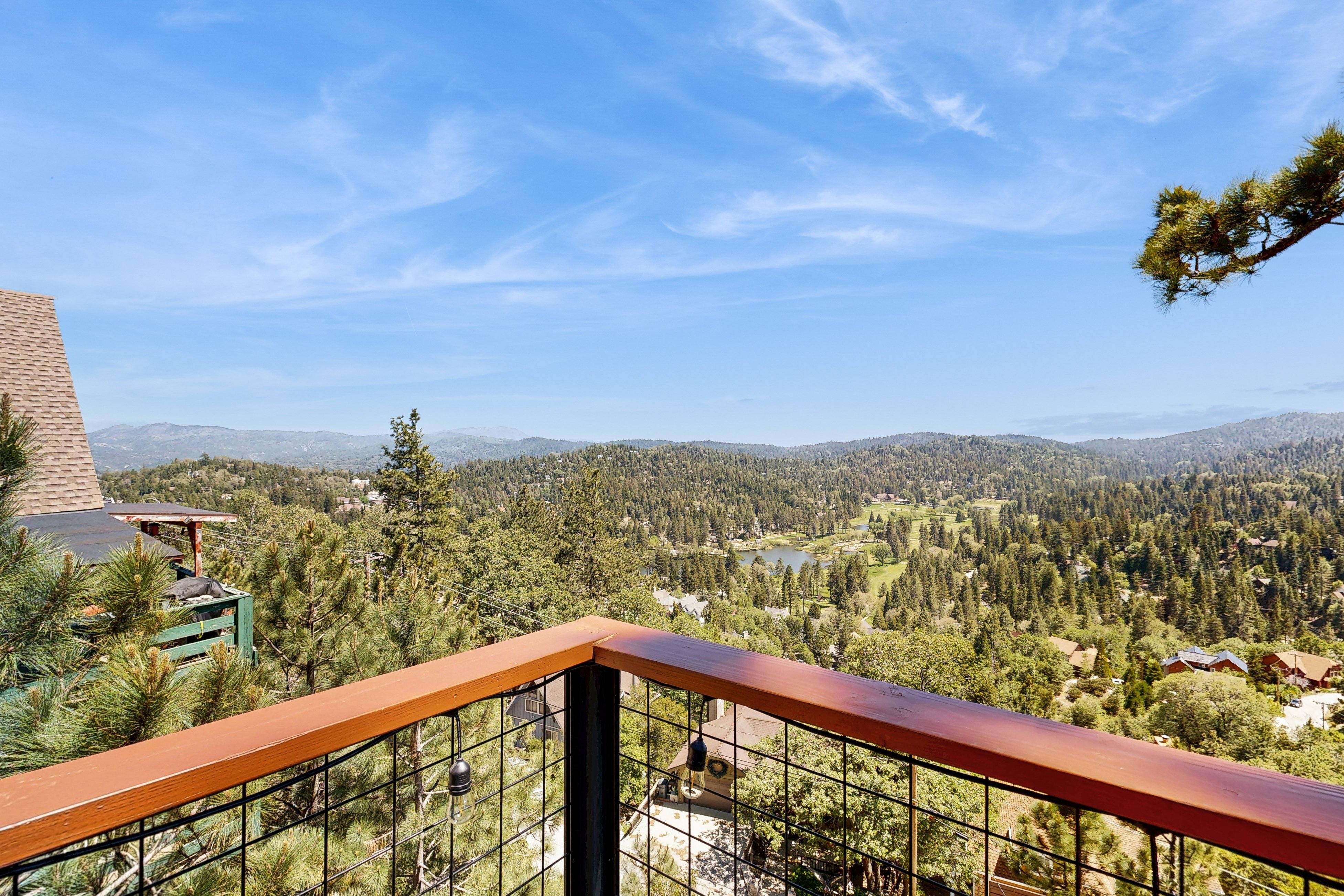
Lake Arrowhead is a year-round pine-forest community above 5,000 feet in the San Bernardino National Forest, sharing a ridge with Crestline and Twin Peaks. The main tradeoff is the water: the lake is privately held, and association rules tie boating and swimming to property ownership rather than to anyone who books a house.
The three towns in this guide sit close together along the Rim of the World Highway, and they are not interchangeable. Lake Arrowhead is the polished one, with a lakeside shopping village, larger homes, and most of the visitor infrastructure on the mountain. Crestline is scruffier and more residential, built around Lake Gregory, which is a public county lake anyone can swim in. Twin Peaks sits between them: quiet, wooded, mostly cabins, with almost nothing commercial.
What surprises first-time visitors is that this is a lived-in place rather than a resort. People commute down the hill to work. Kids go to school here. Businesses keep hours that suit residents, which means shorter hours midweek and through the shoulder seasons. The upside is that nothing feels staged. The downside is that if you arrive at eight on a Tuesday night in April expecting a busy main street, you will be disappointed.
The forest does most of the work. Jeffrey and ponderosa pine, incense cedar, black oak, granite outcrops, and long views over the desert on one side and the Inland Empire on the other. The air is dry and thin, the light is sharp, and the gap between a warm afternoon on the deck and a cold walk at dawn is wider than anything you get at sea level. That contrast is the reason people keep coming back.
Mid-September through late October is the best window. Summer crowds have gone, the air is clear, days are warm enough for the deck and nights cold enough for a fire, and the black oaks turn. Skip late March through April, when the snow has gone patchy and gray and the forest looks its worst.
Summer is the busiest season and the reason most people come. Days run warm but not valley-hot, evenings cool off quickly, and the water at Lake Gregory is genuinely swimmable. July and August also bring monsoon moisture, which builds into afternoon thunderstorms: dramatic, brief, and occasionally the reason a trail turns into a creek for twenty minutes. Weekends fill. Midweek in June, before school lets out across Southern California, is one of the quietest and most pleasant stretches of the year.
Winter is the other peak, and it is more volatile than people expect. Snow is not guaranteed on any given weekend, and then a single storm drops enough to close the highways for days. Thanksgiving through New Year's books out early and stays booked. If you want snow with some confidence, aim for January and February, and keep your plans loose enough to shift a day in either direction.
Spring is the honest weak spot. Snowmelt turns the dirt roads to mud, the deciduous trees are still bare, and businesses that ran hard all winter take their time off. Rates drop to match. If all you want is a quiet cabin and a book, April is a bargain. Just do not come expecting the postcard.
Stay in Lake Arrowhead for walkable shops and the largest homes. Stay in Crestline for a public lake you can actually swim in and lower rates. Stay in Twin Peaks or Blue Jay for quiet woods within a short drive of both. Cedar Glen and Skyforest suit people who want to be left alone.
Lake Arrowhead is really two things sharing a name. Lake Arrowhead Village is the commercial center at water level, with shops, restaurants, a boat dock, and the only real concentration of activity on the mountain. Arrowhead Woods is the surrounding residential zone whose properties carry lake-use rights through the Arrowhead Lake Association. That distinction matters when you book: lake rights attach to the owner, and association rules limit how far those privileges extend to short-term guests. Ask your host directly rather than assuming you will be on the water.
Crestline is the value play and, for families with small children, often the better call. Lake Gregory Regional Park is a county facility, so anyone can buy a day pass, swim off the beach in summer, fish, or walk the loop around the water. The town is plainer than Lake Arrowhead, with older and more mixed housing stock and a small commercial strip. If your trip is built around getting in the water, Crestline removes the single biggest obstacle.
Twin Peaks, Blue Jay and Rimforest are the in-between towns: mostly residential, heavily wooded, and priced below comparable Lake Arrowhead homes. Blue Jay has a supermarket and a handful of businesses; Twin Peaks and Rimforest have very little. Cedar Glen, on the far side of the lake, is more rustic and more remote, with steeper roads that get harder to reach once it snows. Skyforest sits up on the ridge with big views and the SkyPark at Santa's Village attraction. Further east along Highway 18, Running Springs is the pick if you want to be closest to lift-served skiing at Snow Valley.
You need a car. A small regional operator runs limited mountain bus routes built around residents' schedules rather than visitors', and ride-hailing thins out fast once you leave the Village. Every approach is a sustained mountain grade: Highway 18 from San Bernardino, Highway 330 from Highland, and Highway 138 from the Cajon Pass.
Once you are up, Highway 18 runs the ridge and Highways 189 and 173 drop toward the lake, the Village and Cedar Glen. One trap is worth knowing: the northern portion of Highway 173 beyond Lake Arrowhead is not a paved through route toward the desert, and mapping apps have sent drivers that way. If your directions call for 173 north, ignore them and stay on a numbered highway you can see pavement on.
Traffic follows a weekend rhythm you can plan around. Friday afternoon and evening are heavy going up. Sunday from late morning through the afternoon is heavy coming down, and a single fender-bender on a two-lane grade backs up the whole mountain. Leaving before mid-morning on Sunday, or waiting until evening, usually spares you the worst of it. Highway 330 in particular has a history of closures for slide repair, so confirm it is open instead of assuming.
Parking catches people out more than driving does. The Village lot is large and still fills on summer and snow weekends. Most Forest Service trailheads require an Adventure Pass displayed in the windshield, sold at ranger stations and local shops. Roadside parking for snow play is restricted along the mountain highways and enforced with tickets and tows, so use a designated snow play area rather than the first pullout with a slope on it. And before you book, check that the house has a driveway you can get up in snow and find out whether plowing is included.
The outdoors is the main event. San Bernardino National Forest surrounds all three towns, with everything from a short arboretum loop to sections of the Pacific Crest Trail and the long descent into Deep Creek. In winter the same terrain turns into sledding, snowshoeing and lift-served skiing a short drive east.
For hiking, Heaps Peak Arboretum on Highway 18 is the gentle introduction: a short interpretive loop through mixed conifer and dogwood that works for almost any fitness level. The fire lookout hikes on the peaks above the rim pay out the best views up here, with the Mojave on one side and the valley on the other. Stronger walkers head for the PCT and the Deep Creek drainage below the rim, which stays hot and exposed well into fall and deserves more water than the mileage suggests. Forest roads make for good mountain biking, and there is purpose-built singletrack around Skyforest.
On the water, Lake Gregory in Crestline is the one you can swim in, with a beach, rentals and summer attractions. Lake Arrowhead is best seen from the Lake Arrowhead Queen tour boat or from the Village boardwalk, unless your host can arrange association access. Below the rim, Silverwood Lake State Recreation Area is a full public reservoir with boating, swimming and fishing. It runs hotter and lower than the mountain, which makes it a useful backup on a cool spring day.
Families with young kids tend to build one day around SkyPark at Santa's Village in Skyforest, which runs bike trails, zip lines and seasonal programming, and another around the beach at Lake Gregory. Older kids do better with sledding in winter and the boat tour in summer. Culturally, the mountain runs on small galleries, a summer farmers market, craft fairs and community theater rather than institutions. Plenty of visitors do none of the above and treat a deck, a fire and a book as the entire itinerary. That is a completely legitimate use of the place.
Set expectations correctly: this is casual mountain food, not a destination dining scene. What the area does well is a hearty American breakfast, pizza, burgers, barbecue, and a few long-running family restaurants that have outlasted several economic cycles. Two clusters hold most of it, Lake Arrowhead Village and the strip in Crestline near Lake Gregory.
The real planning issue is hours rather than quality. Restaurants here staff for weekends and holidays. Midweek, and through the shoulder seasons in spring and late fall, kitchens close early and some places shut two or three days a week entirely. Call before you drive across the mountain on faith. On a snow weekend the opposite problem applies and waits get long, so eat earlier than you normally would.
Groceries are well covered. Blue Jay and Crestline both have full supermarkets, with smaller markets scattered along the rim. Prices run higher than down the hill, which is what happens when everything arrives by truck over a mountain grade. Most experienced visitors do one big shop in the valley before they climb and top up locally. If your rental has a decent kitchen and a deck, cooking is honestly the better plan for at least half your dinners.
Coffee is a genuine strength, with independent roasters and cafes in both Lake Arrowhead and Crestline, and the fireplace-and-a-drink category is well served too. What you will not find is much late-night anything. The mountain goes quiet early, particularly outside summer.
Three things surprise visitors most: how cold it gets at night in any season, how quickly a storm can close the highways, and how strictly parking is enforced. Pack real layers, check Caltrans road conditions before you leave and again before you descend, and keep the car above half a tank for the whole trip.
Above 5,000 feet the daily temperature swing is large year-round. A July afternoon on the deck can be a T-shirt, and the same deck at dawn will want a jacket. The sun is stronger than it feels, the air is dry, and mild altitude effects like a headache or a poor first night's sleep are common. Drink more water than you think you need, and bring sunscreen even in January, when the snow reflects everything back at you.
In winter, Caltrans posts chain requirements on the mountain highways and enforces them at checkpoints on the way up. All-wheel drive with snow-rated tires clears the lower restriction levels, though not the highest ones, and many rental car contracts forbid fitting chains at all. Carry chains you know how to put on, or plan around the forecast. The 2023 storm cycle that isolated these communities and kept roads closed for well over a week is the outer edge of what the mountain can do, and it is a good argument for keeping a few extra days of food, water and medication in the house during a serious storm.
From late summer into fall, fire is the governing concern. The Forest Service restricts open flame during high-danger periods, utilities run public safety power shutoffs when winds are extreme, and evacuation notices in the San Bernardino Mountains are a routine feature of the season rather than a rare event. Sign up for San Bernardino County emergency alerts when you arrive and read the evacuation route your host posts. Separately, secure your trash, because black bears live here and a bag left on the porch is an invitation. Book well ahead for holiday weekends, the first big snow of the season and summer Saturdays, expect most homes to set a minimum stay, which is shown on the listing and in your quote, and download offline maps before you climb, since cell coverage drops out in the canyons.
Usually not. Lake Arrowhead is privately held, and lake use runs through the Arrowhead Lake Association, whose privileges attach to property owners in Arrowhead Woods rather than to short-term guests. Some owners can arrange limited access and many cannot, so ask your host before you book rather than assuming. If swimming is central to the trip, book in Crestline instead: Lake Gregory is a public county park with a summer swim beach open to anyone who buys a day pass.
Carry chains in winter. Caltrans posts chain requirements on Highways 18, 330 and 138 during storms and enforces them at checkpoints on the way up. All-wheel drive with snow-rated tires clears the lower restriction levels, but the highest level requires chains on every vehicle, and many rental car contracts forbid fitting them at all. Check the Caltrans road conditions page before you leave the valley and again before you head down.
Book Lake Arrowhead for walkable shops and restaurants at the Village, larger and newer homes, and the more polished version of the mountain. Book Crestline if the trip is built around swimming, if you are traveling with young children, or if rate matters more than finish. Crestline is plainer and its housing stock is older, but Lake Gregory is public water and the town is less crowded on peak weekends.
Most San Bernardino National Forest trailheads require an Adventure Pass displayed in your windshield, sold at ranger stations and many local shops. For snow, use a designated snow play area rather than pulling onto the shoulder of Highway 18 or 330. Roadside parking on the mountain highways is restricted during snow events and actively ticketed and towed, and a car left in a plow lane is a genuine hazard on a two-lane grade.
You wait it out in the house. Caltrans closes the mountain highways during heavy snow and reopens them as plows clear, which can take hours or, in a severe cycle like the one in 2023, well over a week. Keep the car above half a tank, bring a few extra days of food, water and any medication you take, and expect the power to go out at some point. Ask your host where the flashlights and spare blankets are when you check in.
6 guides
6 guides
2 guides
3 guides
Cabins and lake-area houses across Lake Arrowhead, Crestline, Twin Peaks and Blue Jay, managed by a local team that lives on the mountain.
See homes in Lake ArrowheadDecember is when Lake Arrowhead, Crestline and Skyforest are at their most crowded and their best. How to book it and how to get up the hill.
A balanced comparison for the Lake Arrowhead area: space, kitchen, laundry, privacy, cost shape and minimum stays, plus where a hotel is the better call.


